Tiếng Việt
 English
 中文
 Español
 हिन्दी
 Français
 Português
 Русский
 Deutsch
 日本語
 한국어
 Italiano
 Bahasa Indonesia
 ไทย
 বাংলা
 ລາວ
 မြန်မာ
 العربية
 فارسی
 اردو
 Українська
 Română
 Azərbaycan
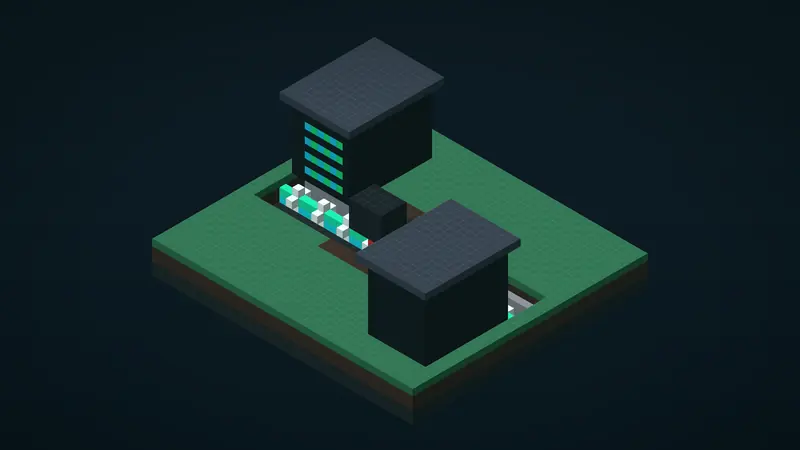
A pervasive misconception in modern network architecture holds that optical fiber conduits are physically immune to eavesdropping. Unlike legacy unshielded copper cabling, which radiates detectable electromagnetic fields, silica glass optical fibers guide laser pulses entirely within an internal core. This characteristic has led many enterprises, cloud providers, and financial institutions to lease unencrypted "dark fiber" runs across metropolitan areas, assuming that physical access to subterranean conduits is too difficult or that tapping a glass strand without snapping it is impossible.
Physical optics demonstrates that optical fiber is vulnerable to stealthy, non-invasive physical interception. By applying controlled mechanical curvature to a standard single-mode optical strand—a technique known as macrobending—an adversary alters the internal angle of incidence within the glass core. A fraction of the propagating photons escapes through the cladding via evanescent wave coupling. Using clip-on optical tap couplers and high-sensitivity photodetectors, attackers can siphon multi-gigabit Dense Wavelength Division Multiplexing (DWDM) data streams while introducing attenuation so minor that standard supervisory monitoring systems fail to trigger an alert.
Because physical custody of thousands of kilometers of municipal utility trenches, subterranean conduits, and third-party telecom carrier hotels is unachievable, enterprise security must operate under a strict Zero-Trust physical layer paradigm: assume the glass itself is tapped. Establishing line-rate WireGuard cryptographic overlay tunnels across DWDM links ensures that even if adversaries siphon photons directly from the physical core, the captured optical signals represent uncrackable, high-entropy ciphertext.
The Physics of Macrobend Light Leakage and Optical Tapping
Standard telecommunications optical fiber (such as ITU-T G.652 single-mode fiber) operates on the principle of total internal reflection. Light pulses travel within a germania-doped silica core with a refractive index of approximately $n_1 \approx 1.468$, surrounded by pure silica cladding with a slightly lower refractive index ($n_2 \approx 1.462$). As long as the angle of incidence exceeds the critical angle $\theta_c = \arcsin(n_2 / n_1)$, all optical power remains trapped inside the core.
Normal Optical Fiber Propagation (Total Internal Reflection):
══════════════════════════════════════════════════════ Cladding (n2)
─── Core (n1) ───►  Light bounces at θ > θc  ───► Core (n1)
══════════════════════════════════════════════════════ Cladding (n2)

Adversarial Macrobend Tapping (Evanescent Photon Leakage):
                      ╭── Macro-Curvature Radius (r < 15mm)
═════════════════════╯    ════════════════════════════ Cladding
─── Core (n1) ───►  θ < θc ───► 98% Power Continues ── Core
═════════════════════╮    ════════════════════════════ Cladding
                      ╰── Photo-Detector Coupler (Captures 1-2% Leaked Photons)
                                │
                                ▼ [Optical Pre-Amplifier & Demux]
                         Adversary Raw Ethernet Stream Reconstruction
When an adversary accesses an unarmored fiber cable in a roadside utility manhole or splice cabinet, they gently bend the bare fiber strand over a curved mandrel with a radius between 8mm and 15mm. This mechanical bend forces the angle of incidence of peripheral optical modes to fall below the critical angle $\theta_c$.
A small portion of the optical field radiates out of the core into the cladding as an evanescent wave. An optical tap clamp equipped with an index-matching optical gel and a high-sensitivity InGaAs avalanche photodiode collects the escaping photons. Because modern optical receivers require only microwatts of optical power to demodulate high-speed signals, capturing just 1% to 3% of the optical signal is sufficient to reconstruct cleartext bitstreams.
The Failure of Optical Time-Domain Reflectometry (OTDR) Monitoring
Network operators frequently rely on Optical Time-Domain Reflectometry (OTDR) and optical power meters to detect physical fiber breaches. OTDR injects high-power optical pulses down the fiber and measures backscattered Rayleigh light and Fresnel reflections to map attenuation anomalies along the link.
However, sophisticated macrobend interception exploits fundamental physical blind spots in standard OTDR monitoring:
- Sub-Threshold Insertion Loss: Skilled macrobending introduces an insertion loss between 0.05 dB and 0.2 dB. Standard carrier monitoring thresholds are configured to alert only at losses exceeding 0.5 dB to 1.0 dB to prevent false alarms caused by routine thermal expansion and environmental vibration.
- Dead Zones and Event Masking: Splice trays, optical distribution frames (ODFs), and patch panels introduce natural reflection spikes. Attackers place macrobend taps immediately adjacent to legitimate patch points or mechanical splices, effectively masking the leakage within the OTDR attenuation event dead zone.
- DWDM Wavelength Selectivity: On Dense Wavelength Division Multiplexing links, dozens of distinct optical channels (wavelengths ranging from 1525nm to 1565nm) propagate simultaneously over a single strand. Because higher wavelengths (such as 1550nm and 1625nm) suffer significantly greater bend loss than 1310nm signals, an attacker can siphon high-capacity C-band data while leave low-frequency supervisory channels completely undisturbed.
Consequently, optical supervisory monitors view a macrobent fiber as an operating link experiencing minor environmental drift, leaving the physical tap undetected for months or years.
WireGuard End-to-End Cryptographic Overlay Architecture
Securing high-capacity dark fiber interconnects against physical tapping requires moving the security perimeter from physical glass into deterministic cryptographic software overlays.
Data Center Node A (Linux Edge Router)
         │
         ▼ [Internal Raw Layer-2/Layer-3 Packets: 10.100.0.0/16]
WireGuard Tunnel Interface (wg0)
         │
         ▼ [Encapsulation: ChaCha20-Poly1305 / Noise IK Handshake]
Transceiver DWDM Optical Transponder (100G/400G Wavelength)
         │
         ▼ [Multi-Kilometer Subterranean Single-Mode Dark Fiber]
Physical Macrobend Tap Clamp (Adversary Clamping Site)
         │
         ├── Intercepted Leaked Photons (Siphoned 2% Optical Power)
         │         │
         │         ▼ [Adversary Reconstructs UDP Datagrams: High-Entropy Noise]
         │       No Cleartext / No Valid Session Keys / Mathematical Impasse
         │
         ▼ [98% Optical Power Reaches Destination Transceiver]
Data Center Node B (Linux Edge Router)
         │
         ▼ [Decapsulated & Poly1305-Verified Internal Traffic]
Core Storage Cluster & Cross-DC Database Replication
WireGuard neutralizes physical-layer optical interception through distinct architectural mechanisms:
Indistinguishability from Random Noise
WireGuard packets are encapsulated inside UDP datagrams where all payload bytes, counter values, and authentication tags are cryptographically randomized under the ChaCha20-Poly1305 construction. An adversary siphoning photons off a dark fiber link sees only high-entropy pseudorandom noise. There are no cleartext protocol headers, unencrypted frame boundaries, or predictable sequence numbers for the attacker to parse.
Mutual Identity Binding via Cryptokey Routing
WireGuard binds IP addresses directly to static Curve25519 public keys. If an attacker attempts an active optical injection attack—such as splicing an active laser to inject forged BGP packets or modify internal data in transit—the Poly1305 authentication check fails instantly in the kernel. The packet is dropped silently without processing, preventing physical-layer optical tampering.
Low Overhead on High-Bandwidth Interconnects
Hardware-based optical Layer-1 encryptors require expensive, proprietary transponders that add significant capital expenditures and lock enterprises into specific vendor hardware. WireGuard runs natively in the Linux kernel and scales across multi-core server architectures, delivering multi-gigabit throughput across commodity dark fiber transceiver links with negligible latency overhead.
Deploying Kernel-Level WireGuard Routing for Dark Fiber Interconnects
To defend inter-data center dark fiber lines against physical light leakage, network engineers configure dedicated Linux gateway nodes to terminate the optical interconnect inside a secure WireGuard tunnel.
The following configuration demonstrates a high-throughput WireGuard deployment connecting two enterprise facilities over an optical fiber link (/etc/wireguard/wg0.conf):
[Interface]
# Locally generated Curve25519 private key
PrivateKey = gGGGGGGGGGGGGGGGGGGGGGGGGGGGGGGGGGGGGGGGGGG=
Address = 10.200.0.1/30
ListenPort = 51820

# Jumbo Frame MTU optimization for dedicated fiber interconnects
MTU = 8920

# High-performance routing: Offload packet processing to multiple CPU cores
PostUp = ip link set wg0 txqueuelen 5000
PostUp = iptables -t nat -A POSTROUTING -o wg0 -j MASQUERADE
PostDown = iptables -t nat -D POSTROUTING -o wg0 -j MASQUERADE

[Peer]
# Remote Data Center Security Gateway Public Key
PublicKey = hHHHHHHHHHHHHHHHHHHHHHHHHHHHHHHHHHHHHHHHHHH=

# Restrict routed subnets strictly to inter-DC synchronization networks
AllowedIPs = 10.200.0.0/30, 10.100.0.0/16, 172.28.0.0/14

# Physical Optical Interface Endpoint (Direct DWDM IP)
Endpoint = dwdm-transceiver-b.vpnrice.internal:51820

# Keepalive maintains active tunnel state across optical switch reconfigurations
PersistentKeepalive = 15
To eliminate any chance of unencrypted database replication or storage packets exiting across the raw optical transceiver interface during link flaps, administrators implement strict nftables isolation:
table inet fiber_guard {
    chain output_filter {
        type filter hook output priority filter; policy drop;

        # Permit local system loopback
        oifname "lo" accept

        # Permit intra-cluster internal LAN interfaces
        oifname { "eth1", "eth2" } accept

        # Permit exclusively WireGuard UDP packets out to the physical DWDM link
        oifname "eth0" udp dport 51820 accept

        # Permit decrypted tunnel traffic through the virtual interface
        oifname "wg0" accept
    }

    chain forward_filter {
        type filter hook forward priority filter; policy drop;

        # Forward storage and compute replication traffic strictly through WireGuard
        iifname "eth1" oifname "wg0" accept
        iifname "wg0" oifname "eth1" ct state established,related accept
    }
}
The physical realities of optical fiber prove that glass conduits cannot be treated as secure perimeters. By deploying line-rate WireGuard cryptographic overlays across every dark fiber run, enterprises render optical tapping techniques useless, ensuring confidentiality and data integrity regardless of physical conduit compromises.