Tiếng Việt
 English
 中文
 Español
 हिन्दी
 Français
 Português
 Русский
 Deutsch
 日本語
 한국어
 Italiano
 Bahasa Indonesia
 ไทย
 বাংলা
 ລາວ
 မြန်မာ
 العربية
 فارسی
 اردو
 Українська
 Română
 Azərbaycan
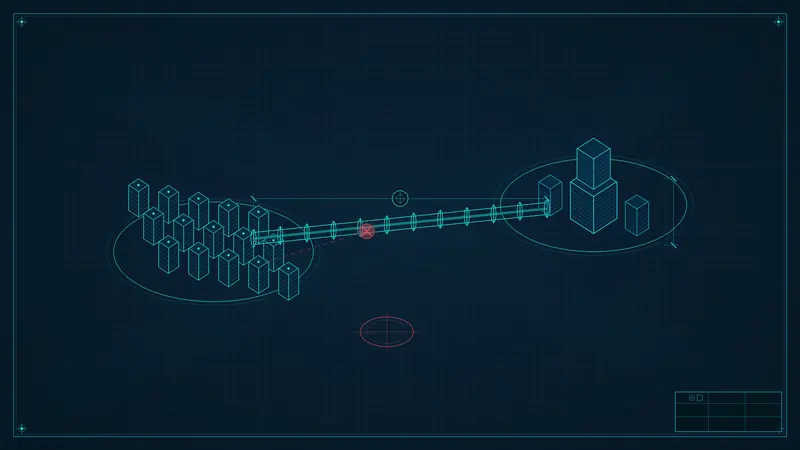
Decentralized proof-of-work consensus relies fundamentally on the integrity of underlying physical and optical transit networks. In late November 2026, telemetry released by major industrial mining infrastructure providers, including Braiins, revealed an alarming series of coordinated Border Gateway Protocol (BGP) routing attacks targeting global Bitcoin mining infrastructure. Over multiple synchronized intervals, malicious autonomous systems injected forged routing prefixes across Tier-1 internet backbones, silently disconnecting more than 1,000 enterprise mining sites across Europe and North America and redirecting between 0.6 and 1.9 Exahashes per second (EH/s) of computing capacity.
The incident underscores a systemic vulnerability lingering within the multi-billion-dollar cryptocurrency mining industry: reliance on the legacy Stratum V1 communication protocol across unauthenticated, cleartext public IP transit routes. By exploiting the inherent trust model of global inter-domain routing, adversaries intercepted compute jobs and harvested block rewards without compromising physical ASIC hardware, cracking firmware, or breaching mining pool servers.
Securing high-throughput industrial infrastructure against wide-area routing manipulation demands moving beyond unencrypted transit. Enterprise mining operators must enforce deterministic cryptographic peer tunnels. Deploying WireGuard overlay connections between mining farm proxies and pool endpoints guarantees mutual authentication, encapsulating Stratum telemetry within modern authenticated encryption and rendering BGP prefix manipulation ineffective.
The Mechanics of BGP Prefix Injection and Mining Traffic Diversion
Border Gateway Protocol forms the routing mesh of the global internet, establishing paths between distinct Autonomous Systems (AS). BGP path selection operates on a set of standardized heuristics, prioritizing the most specific IP prefix (longest prefix match) and the shortest AS-Path. Because legacy BGP implementations lack inherent cryptographic validation of route origin announcements, an adversarial network operator or compromised transit provider can broadcast unauthorized advertisements claiming ownership of an IP block assigned to a legitimate organization.
Legitimate Mining Pool Operator (AS65001)
        Announces: 198.51.100.0/22 (Broad Prefix)
                    │
                    ▼ (Default Public BGP Routing Table)
Internet Tier-1 / Tier-2 Backbone Routers
                    ▲ (BGP Longest Prefix Match Rule Prioritizes /24)
                    │
Adversarial Autonomous System (AS65666)
        Announces Forged: 198.51.100.0/24 (More-Specific Route)
In the November 2026 campaign, the attackers observed that primary stratum endpoints for targeted mining pools were hosted within broad /22 or /21 network blocks. By announcing forged /24 sub-allocations through complicit or misconfigured upstream peers, the rogue autonomous system became the mathematically preferred transit destination for all global internet routers adhering to standard longest-prefix routing rules.
When upstream Tier-1 transit providers propagated the forged /24 announcements across the internet routing table, traffic emitted by thousands of Application-Specific Integrated Circuit (ASIC) machines destined for the pool's legitimate IP addresses was dynamically rerouted to the adversary's interception clusters.
The Architectural Flaw of Cleartext Stratum V1 Telemetry
The devastation of the attack was amplified by the architectural obsolescence of Stratum V1. Designed in 2012 as an extension of JSON-RPC over raw TCP, Stratum V1 lacks transport layer encryption and cryptographically signed server authentication. Mining rigs establish plain TCP connections, transmitting work requests and submitting proof-of-work share solutions in cleartext ASCII.
ASIC Mining Farm (Stratum V1 Client)
        │
        ▼ (TCP Connection to Pool IP: 198.51.100.25:3333)
Hijacked BGP Routing Route (Longest Prefix Match)
        │
        ▼
Adversary Impostor Stratum Proxy (Man-in-the-Middle)
        │
        ├── Step 1: Intercepts mining.subscribe and mining.authorize
        ├── Step 2: Injects adversary mining.set_extranonce and coinbase parameters
        └── Step 3: ASIC computes valid shares for adversary's payout address
When the forged BGP route diverted the miners' TCP sessions, the adversary's proxy intercepted incoming connections seamlessly. Because Stratum V1 provides no mechanism for the client to verify the cryptographic identity of the server, the ASIC rigs continued hashing operations at full thermal capacity.
The rogue proxy intercepted the mining.notify message, substituting the pool's payout coinbase transaction with an address controlled by the threat actor while preserving valid block header generation. The mining rigs expended megawatts of electrical power solving proof-of-work equations, but every valid share submitted was attributed to the adversary's ledger. For periods lasting from 6 to 49 minutes per wave, the attackers effectively siphoned hundreds of thousands of dollars in block generation shares without generating hardware failure alarms on farm monitoring dashboards.
Failures of RPKI and Route Filtering in Real-World Transit
Network operators frequently assume that Resource Public Key Infrastructure (RPKI) and Route Origin Authorization (ROA) eliminate the risk of BGP hijacking. While RPKI provides cryptographic validation linking an IP address block to an authorized AS number, its global enforcement remains incomplete and fragmented.
In practice, multiple factors undermined route protection during the incident:
- Incomplete Upstream Validation: Many Tier-2 and regional internet exchange point (IXP) routing engines do not reject RPKI Invalid routes, instead merely deprioritizing them or ignoring validation states completely.
- Sub-Allocation Gaps: Organizations often publish ROAs covering their parent allocation (such as
/21), but fail to enforcemaxlenconstraints. If a ROA permits announcements up to/24, an adversary can forge an AS-Path sequence that appears valid under loose origin checks. - AS-Path Spoofing: Attackers prepend the victim's legitimate AS number at the terminal position of the AS-Path. Standard RPKI Route Origin Validation (ROV) verifies only the origin AS, failing to validate whether intermediate transit providers legitimately received the route from that origin.
Because physical inter-domain routing cannot guarantee uninterrupted transport integrity, critical computing workflows must not rely solely on the trust assumptions of the public internet routing table.
WireGuard Cryptographic Overlay Architecture for Mining Facilities
To achieve absolute immunity against BGP routing diversion, enterprise mining facilities must decouple their operational telemetry from physical BGP routing paths. Encapsulating Stratum traffic within an authenticated, encrypted WireGuard overlay guarantees that packets cannot be intercepted, redirected, or altered in transit.
WireGuard operates directly within the Linux kernel, utilizing the Noise Protocol Framework (specifically the Noise IK handshake pattern) to establish point-to-point authenticated tunnels.
Enterprise ASIC Mining Fleet
        │
        ▼ (Local Stratum Traffic: TCP 3333)
Local Farm Farm-Gateway / Stratum Proxy
        │
        ▼ (Kernel Cryptokey Routing: AllowedIPs = 10.42.0.1/32)
WireGuard Network Interface (wg0)
        │
        ▼ (Encapsulated in ChaCha20-Poly1305 UDP Datagrams: Port 51820)
Public Internet / Untrusted BGP Routing Mesh
        │
        ├── BGP Hijack Attempted by Rogue AS?
        │         │
        │         ▼ (Impostor lacks Pool's Curve25519 Private Key)
        │     Noise Handshake Fails / Packets Discarded / Zero Data Leaked
        │
        ▼ (Direct Encapsulated Transit)
Hardened Mining Pool Gateway (WireGuard Peer)
        │
        ▼ (Decapsulated Plain Stratum Telemetry)
Mining Pool Consensus & Validation Engine
Under this architecture, the local mining farm gateway runs a secure proxy that terminates connections from individual ASIC workers. The gateway routes all outbound mining telemetry through a dedicated WireGuard interface (wg0).
Cryptokey Routing enforces cryptographic binding between IP addresses and public keys. The mining farm gateway knows the static public key of the legitimate pool server. If a rogue autonomous system hijacks the pool's public IP address, the WireGuard initiator attempting to establish a session with the hijacked IP cannot complete the Noise IK handshake. The impostor server does not possess the pool's private Curve25519 key; consequently, authenticated encryption cannot be established, and no Stratum packets are transmitted.
Hardening Mining Farm Gateways with Kernel-Level WireGuard Routing
Implementing a cryptographic defense requires configuring the mining facility's edge router to bind all Stratum traffic to the authenticated WireGuard peer.
The following configuration demonstrates a production-grade WireGuard client setup deployed on an industrial mining farm Linux edge router (/etc/wireguard/wg0.conf):
[Interface]
# Private key generated specifically for this mining facility gateway
PrivateKey = aAAAAAAAAAAAAAAAAAAAAAAAAAAAAAAAAAAAAAAAAAA=
Address = 10.42.0.2/32
ListenPort = 51820

# Strict routing: flush connection states on route modification
PostUp = iptables -t nat -A POSTROUTING -o wg0 -j MASQUERADE
PostDown = iptables -t nat -D POSTROUTING -o wg0 -j MASQUERADE

[Peer]
# Legitimate Mining Pool Gateway Public Key
PublicKey = bBBBBBBBBBBBBBBBBBBBBBBBBBBBBBBBBBBBBBBBBBB=

# Cryptographic binding: only route to pool internal address across tunnel
AllowedIPs = 10.42.0.1/32

# Hardened Anycast Endpoint of the Mining Pool
Endpoint = pool-eu-anycast.vpnrice.internal:51820

# Keepalive ensures NAT pinholes remain open during low-traffic periods
PersistentKeepalive = 15
On the edge router, nftables rules guarantee that raw Stratum packets never leak across the physical Ethernet interface if the WireGuard tunnel drops:
table inet mining_guard {
    chain egress_filter {
        type filter hook output priority filter; policy accept;

        # Permit loopback and local LAN communication
        oifname { "lo", "eth1" } accept

        # Permit WireGuard UDP encapsulated transit to pool endpoint
        udp dport 51820 accept

        # Drop any raw unencrypted Stratum V1 traffic attempting external egress
        oifname "eth0" tcp dport { 3333, 4444, 8332 } drop

        # Permit internal encrypted tunnel traffic
        oifname "wg0" accept
    }
}
By enforcing kernel-level packet inspection, any attempt by an external actor to redirect the pool IP via BGP routing manipulation results in silent connection drops rather than hashrate diversion. The ASIC miners immediately trigger fallback pool logic, switching to secondary backup endpoints without sacrificing computation or yielding block rewards to an adversary.
Cryptographic peer isolation transforms vulnerable proof-of-work infrastructure into an armored operational enclave, neutralizing wide-area network manipulation at the transport boundary.