Tiếng Việt
 English
 中文
 Español
 हिन्दी
 Français
 Português
 Русский
 Deutsch
 日本語
 한국어
 Italiano
 Bahasa Indonesia
 ไทย
 বাংলা
 ລາວ
 မြန်မာ
 العربية
 فارسی
 اردو
 Українська
 Română
 Azərbaycan
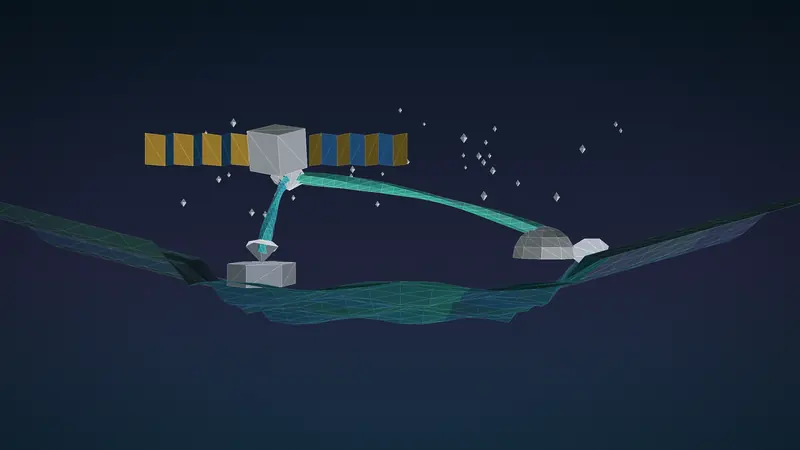
Low Earth Orbit (LEO) satellite mega-constellations have transformed remote mission-critical connectivity. Industrial maritime fleets, offshore energy extraction platforms, defense field operations, and remote mining enterprises now depend routinely on high-throughput, low-latency satellite broadband delivered by orbital networks. Yet the rapid enterprise migration to satellite transport has introduced a pervasive operational fallacy: the assumption that beaming data into the upper atmosphere inherently isolates communications from terrestrial interception and cyber espionage.
Orbital physics dictates that satellites do not operate as isolated sovereign clouds. Instead, commercial LEO spacecraft function as bent-pipe transponders or laser-linked orbital relays that must continuously beam aggregate user traffic down to regional ground station gateways (teleports). Once downlinked, user data enters the physical control of host-nation telecommunications providers, landing directly within jurisdiction-bound transit backhauls exposed to state-mandated lawful intercept taps, regional route hijacking, and edge telemetry harvesting.
Securing remote operational technology across satellite uplinks requires adopting a Zero-Trust transport model. By establishing kernel-level WireGuard cryptographic overlay tunnels directly behind the remote user terminal, organizations eliminate reliance on third-party ground station infrastructure, rendering downlinked satellite payloads opaque to intermediary interception.
The Architecture of LEO Downlink Transit and Gateway Interception
Understanding the ground-level vulnerability of satellite communications requires dissecting the complete data path between a remote user terminal and the public internet.
Remote Industrial Terminal (Offshore Rig / Remote Site)
         │  [Proprietary Phased-Array RF Uplink: Ku/Ka Band]
         ▼
LEO Satellite Constellation (Orbiting at 550 km, Velocity ~7.6 km/s)
         │  [Optical Intersatellite Links / Bent-Pipe Downlink]
         ▼
Terrestrial Ground Station Gateway / Teleport (Host Country)
         │  [RF Demodulation & Layer-2 Frame Extraction]
         ▼
Local Telecommunications Carrier & Terrestrial Fiber Backhaul
         ├── Vulnerability: Lawful Intercept Port Mirroring (CALEA / State Wiretap)
         ├── Vulnerability: Regional BGP Route Injection & Interception
         └── Vulnerability: Unencrypted Telemetry & Cleartext Protocol Inspection
         │
         ▼
Target Enterprise Headquarters or Public Cloud Edge
When an industrial terminal transmits packets, the dish applies proprietary Layer-1 and Layer-2 modulation across radio frequency channels. However, the encryption applied across the radio space link is terminated at the satellite provider's ground gateway. At this terrestrial facility, the gateway demodulates the RF carrier, reassembles raw Ethernet frames, and injects plain IP packets into the local host carrier's fiber backbone.
Because satellite operators distribute gateways across dozens of sovereign jurisdictions to minimize terrestrial transit distance, enterprise traffic frequently downlinks in countries with aggressive telecommunications monitoring mandates. Intelligence agencies and hostile network actors tapping fiber interconnects at teleport landing points can passively capture industrial telemetry, extract plain credentials, and map internal network topologies without ever deploying signals intelligence hardware against the physical satellite dish.
Orbital Dynamics and the Carrier-Grade NAT Dilemma
Operating secure network overlays across LEO constellations presents severe engineering challenges caused by orbital mechanics:
- High Orbital Velocity: LEO satellites traverse the sky at approximately 7.6 kilometers per second, completing an orbit every 90 to 100 minutes. A user terminal maintains contact with a single satellite for only 2 to 5 minutes before performing an electronic beam handover to an ascending spacecraft.
- Dynamic Gateway Handover: As orbital geometries shift, the satellite constellation switches downlink traffic between different terrestrial teleports. A vessel crossing maritime corridors may transition from a gateway in Norway to one in the United Kingdom in minutes.
- Carrier-Grade NAT (CGNAT) Instability: Satellite operators assign private RFC 6598 addresses (
100.64.0.0/10) to user terminals. When beam handovers force gateway transitions, the terminal's egress public IP address changes unpredictably. - Transient Micro-Drops: While phased-array electronically steered antennas switch beams rapidly, instantaneous signal fades and tracking adjustments introduce burst packet loss and jitter.
Legacy enterprise VPN protocols struggle under these orbital dynamics. Stateful protocols such as IPsec IKEv2 and OpenVPN rely on persistent TCP or heavy state machines. When a ground station handover abruptly alters the terminal's egress IP address or drops several packets during beam acquisition, IPsec Security Associations break down. The client must execute a multi-second renegotiation handshake, stalling operational telemetry and freezing industrial SCADA streams.
WireGuard Cryptographic Overlay for Unstable Satellite Transport
WireGuard solves the architectural fragility of satellite communications through its minimalist, stateless UDP protocol design and cryptographic foundations.
Remote Industrial LAN
         │
         ▼ [Internal Cleartext Ethernet: 192.168.10.0/24]
Edge Security Router (WireGuard Initiator)
         │
         ▼ [Encapsulation: ChaCha20-Poly1305 / Noise IK Pattern]
Satellite Dish Terminal (Untrusted Layer-3 Transport / CGNAT)
         │
         ▼ [Space Uplink -> LEO Satellite -> Ground Teleport]
Hostile / Monitored Terrestrial Ground Network
         │  [Intercepted Packets Contain Only High-Entropy Ciphertext]
         ▼ [Terrestrial Transit Backhaul: Port 51820 UDP Datagrams]
Enterprise Data Center Gateway (WireGuard Responder)
         │
         ▼ [Decapsulated & Authenticated Internal Traffic]
Core Operational Infrastructure & SCADA Management
WireGuard delivers three critical architectural advantages across LEO satellite paths:
Automated Endpoint Roaming
WireGuard eliminates the concept of an ephemeral connection state. Communication is structured around public keys and Cryptokey Routing. When a satellite terminal transitions between terrestrial ground stations and acquires a new public CGNAT IP address, it continues transmitting encrypted UDP datagrams to the enterprise responder.
Upon validating the incoming packet's ChaCha20-Poly1305 authentication tag using the initiator's public key, the responder automatically updates its internal endpoint table with the initiator's new IP address and UDP port. The session resumes instantaneously with zero packet round-trips wasted on renegotiation.
Zero-Response Stealth Architecture
Unauthenticated network probes directed at a WireGuard interface receive no response. Packets lacking valid cryptographic signatures under the Noise IK handshake pattern are silently dropped by the kernel. Hostile actors scanning ground station egress ranges cannot determine whether an enterprise WireGuard peer is active, neutralizing automated port scanning and reconnaissance.
Low Transport Overhead
LEO satellite bandwidth commands premium pricing and strict data quotas. WireGuard introduces an encapsulation overhead of only 32 bytes per packet (UDP header, WireGuard header, and Poly1305 authentication tag), compared to 50 to 80 bytes for IPsec ESP configurations with NAT-Traversal. This reduces bandwidth consumption across high-volume telemetry channels.
Hardening Satellite Edge Routers with Kernel-Level WireGuard Routing
To enforce deterministic security across satellite broadband, the edge router deployed at the remote facility must handle all encryption before traffic reaches the satellite dish.
The following configuration demonstrates an enterprise-grade WireGuard client deployed on a Linux edge router connected to a satellite terminal (/etc/wireguard/wg0.conf):
[Interface]
# Private key generated on the hardened local edge router
PrivateKey = cCCCCCCCCCCCCCCCCCCCCCCCCCCCCCCCCCCCCCCCCCC=
Address = 10.88.0.2/32
ListenPort = 51820

# Enforce MTU clamping for satellite framing overhead
MTU = 1360

# Routing policies: Ensure tunnel routes take precedence
PostUp = iptables -t nat -A POSTROUTING -o wg0 -j MASQUERADE
PostDown = iptables -t nat -D POSTROUTING -o wg0 -j MASQUERADE

[Peer]
# Corporate Headquarters Security Gateway Public Key
PublicKey = dDDDDDDDDDDDDDDDDDDDDDDDDDDDDDDDDDDDDDDDDDD=

# Route all corporate and telemetry subnets exclusively through tunnel
AllowedIPs = 10.88.0.0/16, 172.16.0.0/12, 192.168.0.0/16

# Primary Anycast Endpoint of Enterprise Gateway
Endpoint = vpn-core.vpnrice.internal:51820

# Persistent keepalive maintains NAT mapping across aggressive satellite CGNAT timers
PersistentKeepalive = 25
To eliminate any possibility of unencrypted industrial data leaking across the satellite link during beam drops or hardware restarts, administrators must implement strict nftables egress filtering:
table inet sat_guard {
    chain output_filter {
        type filter hook output priority filter; policy drop;

        # Allow local loopback communication
        oifname "lo" accept

        # Allow local industrial LAN interfaces
        oifname { "eth1", "eth2" } accept

        # Allow WireGuard encapsulated UDP traffic to satellite dish WAN
        oifname "eth0" udp dport 51820 accept

        # Allow encrypted overlay tunnel communications
        oifname "wg0" accept
    }

    chain forward_filter {
        type filter hook forward priority filter; policy drop;

        # Permit forwarding between local LAN and WireGuard interface
        iifname "eth1" oifname "wg0" accept
        iifname "wg0" oifname "eth1" ct state established,related accept
    }
}
By decoupling security from physical space and ground transit, organizations transform volatile satellite links into hardened cryptographic enclaves. Encapsulating all remote data within modern WireGuard tunnels ensures operational continuity, data integrity, and complete immunity against ground-level telecom surveillance.