 Tiếng Việt
 English
 中文
 Español
 हिन्दी
 Français
 Português
 Русский
 Deutsch
 日本語
 한국어
 Italiano
 Bahasa Indonesia
 ไทย
 বাংলা
 ລາວ
 မြန်မာ
 العربية
 فارسی
 اردو
 Українська
 Română
 Azərbaycan
Network engineers and privacy architects have long wrestled with a fundamental transport dilemma. Traditional Layer 3 tunnels—such as WireGuard, IPsec ESP, and OpenVPN UDP—provide optimal throughput and zero head-of-line blocking by transmitting standalone datagrams. However, because they operate on dedicated UDP destination ports (such as UDP 51820 or UDP 1194), corporate firewalls, hotel captive portals, and restrictive Internet service providers frequently drop or throttle their packets.
The historical workaround was wrapping VPN traffic inside reliable TCP streams over port 443, mimicking legacy HTTPS. While this allowed packets to transit restrictive middleboxes, it introduced the destructive TCP-over-TCP meltdown. Whenever transit networks experienced routine packet loss, outer TCP retransmission timers collided with inner TCP flow control, causing bufferbloat, latency spikes, and throughput collapse.
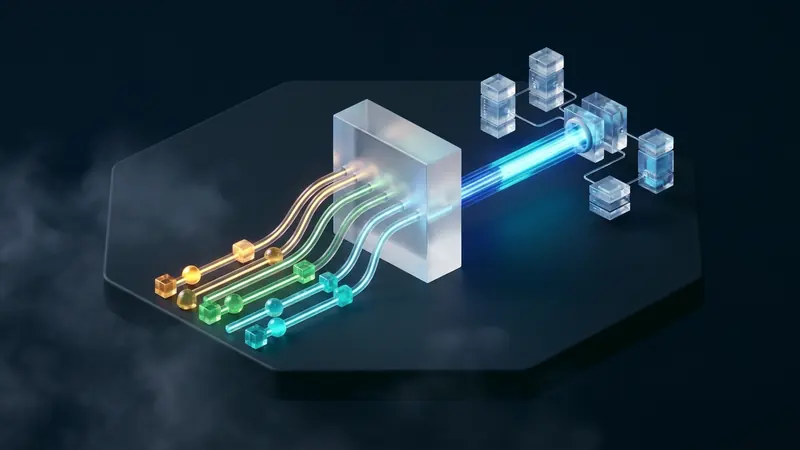
The IETF MASQUE (Multiplexed Application Substrate over QUIC Encryption) working group solved this structural dilemma. By standardizing mechanisms to encapsulate raw UDP and Layer 3 IP datagrams over HTTP/3, MASQUE delivers unhindered datagram transport dressed in the cryptographic wire image of standard web browsing.
The MASQUE Protocol Suite: QUIC Datagrams and the Capsule Protocol
MASQUE is not a single monolithic protocol. It is an integrated framework built upon three distinct IETF specifications designed to operate over HTTP/3 and QUIC (RFC 9000):
- QUIC Datagram Extension (RFC 9221): Standard QUIC transport ensures reliable, ordered delivery of application data streams. RFC 9221 introduces
DATAGRAMframes (0x30without length,0x31with length). These frames allow endpoints to transmit unreliable, unordered application data directly inside a QUIC connection. If a datagram frame is dropped in transit, the QUIC stack records the loss for congestion estimation but never retransmits the dropped segment. - HTTP Datagrams and Capsule Protocol (RFC 9297): To multiplex datagrams across multiple HTTP requests over a single QUIC connection, RFC 9297 defines HTTP Datagram identifiers (Quarter Stream IDs) and the Capsule Protocol. Capsules are type-length-value (TLV) binary units transmitted on the reliable HTTP stream. They handle control signals such as MTU path negotiation, address assignment, and route validation, while high-speed user payload datagrams flow over lightweight QUIC datagram frames.
- Proxying UDP and IP (RFC 9298 and RFC 9484): RFC 9298 establishes the
CONNECT-UDPextended method, enabling clients to instruct an HTTP/3 proxy to establish UDP associations with target servers. RFC 9484 expands this capability to Layer 3 networking viaCONNECT-IP, allowing clients to proxy raw IPv4 and IPv6 datagrams. This turns an HTTP/3 connection into a full virtual network interface.
+--------------------------------------------------------------------+
|                         Client Application                         |
+--------------------------------------------------------------------+
| Inner Layer 3 IP Packet / UDP Datagram (Unreliable, Unordered)      |
+--------------------------------------------------------------------+
| MASQUE Layer: RFC 9484 CONNECT-IP / RFC 9298 CONNECT-UDP           |
| Control Signaling: RFC 9297 Capsule Protocol (Reliable Stream)      |
| Data Transport:    RFC 9221 QUIC DATAGRAM Frames (Unreliable)      |
+--------------------------------------------------------------------+
| HTTP/3 Multiplexing Layer (Stream IDs, QPACK Header Compression)   |
+--------------------------------------------------------------------+
| QUIC Transport (RFC 9000) & TLS 1.3 Cryptographic Handshake (0-RTT) |
+--------------------------------------------------------------------+
| Underlying UDP Socket (Port 443, Indistinguishable from Web Traffic)|
+--------------------------------------------------------------------+
Because MASQUE traffic operates on standard UDP port 443 using standard TLS 1.3 cryptographic handshakes, deep packet inspection (DPI) appliances observe only standard QUIC connection parameters, Application-Layer Protocol Negotiation (ALPN) tokens (h3), and TLS ClientHello records. Network middleboxes cannot distinguish a MASQUE virtual network tunnel from a routine video stream or web visit without inspecting encrypted payloads.
Head-of-Line Blocking Elimination Across Multi-Tenant Streams
The primary operational advantage of MASQUE over legacy TLS tunnels (such as OpenVPN TCP or SSTP) is the complete elimination of head-of-line blocking.
In a conventional TCP-based tunnel carrying multiple internal flows, losing a single packet halts delivery of all subsequent data across all inner connections. If a bulk file download drops packet 42, an adjacent real-time voice call or interactive terminal session freezes until packet 42 is retransmitted and acknowledged.
Under MASQUE over HTTP/3:
- Each encapsulated inner stream maps to its own independent context.
- Payload packets travel inside QUIC
DATAGRAMframes that circumvent QUIC stream assembly buffers entirely. - If an encapsulated UDP gaming packet or audio frame drops during transit, the receiving MASQUE endpoint immediately delivers adjacent packets to the operating system network stack without waiting.
- Congestion control operates at the outer QUIC transport layer using modern algorithms like BBRv2 or CUBIC. The outer QUIC transport modulates overall transmission rate based on packet delivery acknowledgments, while inner flows maintain their native congestion dynamics without timer competition.
The result is resilient throughput even over high-latency satellite links or cellular connections suffering from 5% to 10% packet drop rates.
Multi-Hop Privacy Architectures and Oblivious Routing
Beyond performance optimization, MASQUE establishes the technical foundation for privacy-preserving multi-hop proxies. In traditional multi-hop VPN chains, nested tunnels require stacking multiple complete cryptographic handshakes, adding significant latency (multiple round-trips) and severe MTU fragmentation penalties.
MASQUE implements chained proxying natively through HTTP request forwarding:
[User Client]
      │  (QUIC Connection 1: TLS 1.3 encrypted to Ingress Proxy)
      ▼
[Ingress Proxy] ── sees Client IP, cannot see Destination Host
      │  (QUIC Connection 2: CONNECT-IP tunnel to Egress Proxy)
      ▼
[Egress Proxy]  ── sees Destination Host, cannot see Client IP
      │  (Direct IP / UDP delivery)
      ▼
[Target Internet Server]
This architecture forms the operational backbone of systems such as Apple iCloud Private Relay and Oblivious HTTP (OHTTP). The client establishes an outer QUIC connection to the Ingress Proxy. Inside that tunnel, it transmits an encrypted CONNECT request addressed to the Egress Proxy. The Ingress Proxy knows the client origin IP address but has zero cryptographic visibility into the destination request. The Egress Proxy decrypts the outer capsule to forward traffic to the target website, but it has no visibility into the client original IP address.
Because neither intermediary possesses both the client identity and the target destination, user browsing activity remains cryptographically decoupled from network identity.
MTU Overhead and Virtual Interface Engineering
Deploying MASQUE as a full Layer 3 VPN client requires careful engineering of Maximum Transmission Unit (MTU) budgets. Standard Ethernet networks enforce a 1500-byte MTU limit. Encapsulating raw IP packets within HTTP/3 and QUIC introduces layered header overhead:
- Outer IPv4 header: 20 bytes (or 28 bytes for IPv6)
- Outer UDP header: 8 bytes
- QUIC Short Header: 1 to 4 bytes
- QUIC AEAD Authentication Tag: 16 bytes
- QUIC DATAGRAM Frame Header: 2 to 4 bytes
- HTTP Datagram Identifier: 1 to 8 bytes (variable-length integer)
- MASQUE Context ID and Packet Headers: 2 to 6 bytes
In total, MASQUE encapsulation consumes between 50 and 70 bytes of transport overhead per datagram. To prevent inner IP packet fragmentation—which severely impairs throughput—the client virtual TUN interface must advertise a clamped MTU (typically 1420 to 1440 bytes). Additionally, MASQUE implementations employ the Capsule Protocol (DATAGRAM_CONTAINER and MTU negotiation capsules) to verify the maximum supported payload size across intermediate network links.
Dynamic Datagram Tunneling in VPNRice Architecture
Modern cybersecurity infrastructures must withstand both sophisticated traffic analysis and aggressive middlebox interference without introducing performance bottlenecks. VPNRice integrates these transport principles directly into its dual-layer network stack.
Under standard network conditions, VPNRice routes encrypted traffic across our kernel-optimized RiceGuard protocol, delivering bare-metal wire speed, minimal CPU overhead, and microsecond packet handling. When connecting through heavily restricted environments—such as institutional firewalls that enforce strict UDP port whitelisting—VPNRice activates intelligent transport encapsulation. By packaging datagram payloads across QUIC and HTTP/3 channels on port 443, the connection maintains seamless packet flow, zero head-of-line blocking, and strong cryptographic protection.
Deploying resilient transport protocols ensures reliable privacy across restricted network topologies while preserving real-time packet delivery. By pairing low-overhead kernel architecture with modern datagram encapsulation, VPNRice keeps your network identity protected across all platforms. Get VPNRice.