 Tiếng Việt
 English
 中文
 Español
 हिन्दी
 Français
 Português
 Русский
 Deutsch
 日本語
 한국어
 Italiano
 Bahasa Indonesia
 ไทย
 বাংলা
 ລາວ
 မြန်မာ
 العربية
 فارسی
 اردو
 Українська
 Română
 Azərbaycan
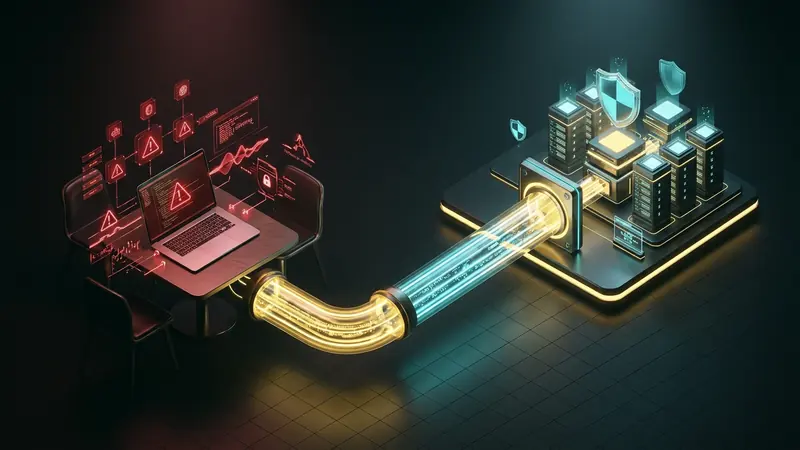
For decades, enterprise cybersecurity relied upon a straightforward spatial metaphor: the castle and moat. Organizations erected a heavily fortified perimeter around their corporate local area networks (LANs). Remote workers, traveling executives, and branch offices used traditional virtual private networks (VPNs) based on legacy OpenVPN or IPsec to cross the digital moat. Once authenticated at the gateway, the incoming client machine was treated as an insider, gaining broad Layer 2 or Layer 3 visibility across entire internal subnets.
However, the rapid migration of enterprise workloads to distributed multi-cloud architectures, combined with the permanent reality of remote software engineering, shattered the castle-and-moat perimeter. When an attacker compromises an endpoint connected to a legacy flat VPN, they do not merely access a single application; they obtain an unrestricted vantage point from which to scan internal address spaces, exploit Server Message Block (SMB) protocols, harvest unencrypted credentials, and execute lateral movement across internal databases.
In response, cybersecurity standards shifted toward Zero Trust Network Access (ZTNA), codified by NIST SP 800-207 under the foundational doctrine: "Never trust, always verify." Yet vendor marketing has frequently oversimplified this paradigm shift, claiming that ZTNA makes transport-layer encryption obsolete.
Understanding the deep architectural distinctions between legacy flat VPNs, application-layer ZTNA reverse proxies, and modern Layer 3 WireGuard cryptographic routing reveals how forward-thinking network engineers achieve true Zero Trust security without sacrificing performance or operational flexibility.
The Fall of the Castle-and-Moat Perimeter Security Model
Traditional remote-access VPN architectures were designed in an era when critical corporate applications resided inside physical server rooms located in headquarters basements. Connecting over an IPsec or OpenVPN tunnel involved authenticating once against a central gateway via RADIUS, LDAP, or pre-shared certificates, after which the client was assigned a virtual IP within the internal corporate subnet.
This traditional design introduced systemic structural liabilities that modern threat actors exploit with devastating efficiency:
1. Broad Lateral Movement and Subnet Enumeration
Once a client tunnel connects to a flat internal network, the remote endpoint can send packets to any host on the subnet unless intricate, brittle access control lists (ACLs) are manually configured on internal core switches. In typical ransomware incidents, an attacker infiltrates a remote worker’s laptop via spear-phishing, inherits the active VPN session, and utilizes network reconnaissance tools to discover internal Active Directory domain controllers, storage appliances, and backup repositories.
2. Static Point-in-Time Authentication
Legacy gateways evaluate user credentials only at the moment of tunnel establishment. If a device’s security posture degrades mid-session—for instance, if local antivirus defenses are disabled or suspicious processes spawn—the VPN tunnel remains open and fully trusted until the user explicitly disconnects or the tunnel lease expires hours later.
3. Gateway Bottlenecks and Hairpin Routing
When all remote traffic must transit through a centralized corporate firewall before reaching SaaS platforms or cloud regions, latency skyrockets. This inefficient "hairpinning" degrades interactive user performance and encourages employees to seek insecure workarounds or disable security clients entirely.
What Is Zero Trust Network Access (ZTNA) and How Does It Function?
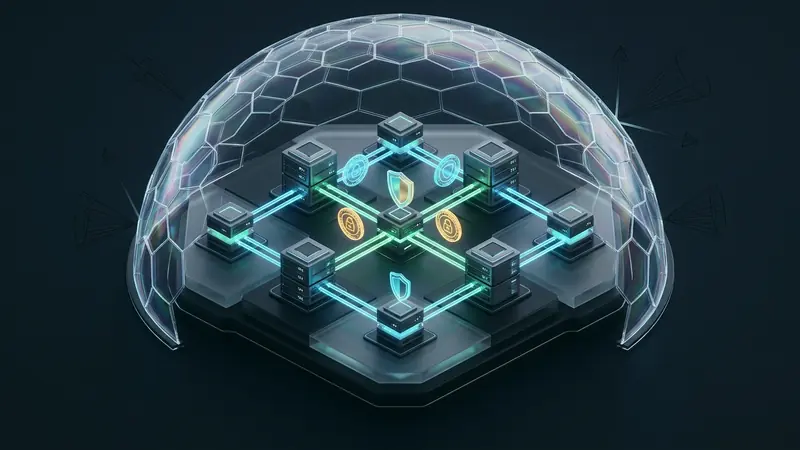
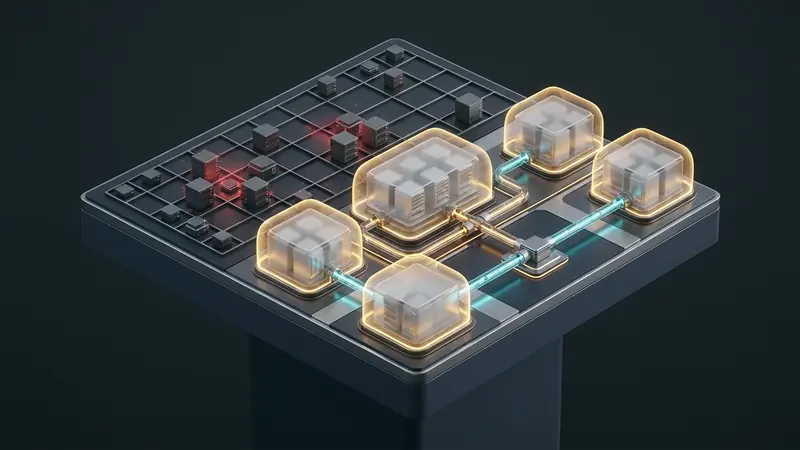
Zero Trust Network Access replaces broad network-level trust with granular, application-specific perimeters. Instead of placing a remote user inside a network segment, ZTNA establishes an ephemeral, identity-aware broker between the authenticated client and a single designated service endpoint.
The ZTNA architecture consists of three core components defined by the NIST Zero Trust model:
- Policy Engine (PE): The brain of the architecture, responsible for evaluating access requests against corporate authorization rules, threat intelligence feeds, and behavioral baselines.
- Policy Administrator (PA): The control plane component that issues commands to establish or terminate communication paths between clients and protected resources.
- Policy Enforcement Point (PEP): The data plane gateway that inspects incoming packets, validates cryptographic session tokens, and mediates the actual data flow to the application.
Under a pure ZTNA model, applications remain completely invisible to the public internet. Web servers and internal databases do not listen on open inbound ports; instead, a local connector daemon establishes an outbound TLS tunnel to the PEP. When a remote user attempts to connect, the ZTNA controller verifies device health, user identity, contextual location, and multi-factor authentication (MFA) before dynamically granting access solely to that specific application socket. The user cannot see, ping, or scan any adjacent server residing in the same cloud virtual private cloud (VPC).
The Architectural Blind Spots of Pure Application-Layer ZTNA Proxies
While ZTNA solves the lateral movement challenge for standard web interfaces, implementing ZTNA exclusively through Layer 7 (HTTP/HTTPS) reverse proxies introduces significant engineering constraints:
1. Protocol Incompatibility and Non-Web Workloads
Most commercial ZTNA platforms rely on browser-based application proxies. While this works seamlessly for Jira, internal wikis, and administrative web dashboards, modern engineering teams rely heavily on non-HTTP protocols. Database administrators require raw TCP connections via PostgreSQL and MySQL clients; software developers run remote SSH tunnels, Git hooks, Docker registries, and Kubernetes kubectl control planes; telecom and video teams transmit real-time UDP streams. Wrapping these arbitrary protocols into Layer 7 web proxies introduces severe latency penalties and frequent connection drops.
2. Processing Overhead and Proxy Latency
Layer 7 inspection requires terminating TLS sessions, parsing HTTP headers, evaluating policy strings, re-encrypting the payload, and dispatching a secondary connection to the origin server. For high-throughput workloads, interactive remote desktops (RDP), or distributed development environments, this computational overhead noticeably degrades user experience compared to kernel-level packet forwarding.
3. Vendor Lock-In and Cloud Controller Dependency
Many proprietary ZTNA solutions route all enterprise traffic through third-party multi-tenant cloud edges. If the vendor's cloud fabric experiences an outage or BGP routing degradation, internal teams lose access to their own on-premise and cloud infrastructure simultaneously.
How Modern WireGuard Layer-3 Cryptokey Routing Unifies Zero Trust
The false dichotomy between "VPN" and "Zero Trust" arises from conflating legacy 1990s hub-and-spoke OpenVPN/IPsec implementations with modern cryptographic tunneling protocols. Modern Layer 3 networking—embodied by WireGuard and enhanced by VPNRice's architecture—enables true Zero Trust principles directly at the transport layer.
WireGuard eliminates legacy VPN vulnerabilities through a mechanism called Cryptokey Routing:
- One-to-One Cryptographic Binding: In WireGuard, every peer is identified exclusively by its public curve25519 key. The kernel network interface maintains a table mapping each public key to a strictly defined list of authorized IP prefixes (
AllowedIPs). - Inherent Packet Filtering: When an outbound packet enters the tunnel, WireGuard examines its destination IP. If the destination does not exactly match an entry in the peer's
AllowedIPslist, the kernel drops the packet immediately. Inbound packets undergo an identical check: if an encrypted packet arrives from a peer whose public key does not map to the inner source IP, it is discarded without processing. - Elimination of Lateral Movement at Layer 3: By defining precise, minimal
/32IPv4 or/128IPv6 host routes within each client'sAllowedIPs, network administrators achieve rigorous microsegmentation directly in kernel space. A compromised remote workstation simply cannot route packets to unauthorized sibling servers, because the kernel interface rejects any IP outside the cryptographic mapping.
VPNRice leverages this architecture alongside RiceGuard DNS sinkholing to provide transport encryption that satisfies the core requirements of Zero Trust:
- Continuous Transport Confidentiality: High-speed ChaCha20-Poly1305 authenticated encryption shields data from local Wi-Fi eavesdropping and ISP inspection.
- Ephemeral Session Integrity: Modern key exchange mechanisms refresh session keys regularly, ensuring that compromised ephemeral material cannot decrypt historical traffic.
- Automated Domain Filtering: Integrated DNS sinkholing evaluates domain lookups against verified threat lists before socket connections initialize, blocking command-and-control (C2) domains and malicious endpoints at zero latency.
Practical Architecture: Deploying Identity-Aware Microsegmentation
Building an agile, secure remote access architecture does not require choosing between sluggish application proxies and insecure flat subnets. An optimal modern deployment integrates Layer 3 WireGuard tunneling with Zero Trust identity enforcement:
- Implement Strict Host-Level Routing: Never configure
AllowedIPs = 0.0.0.0/0on administrative tunnels connecting to production infrastructure. Instead, provision explicit single-host IP allocations (/32or/128) tailored to the exact services an engineer requires. - Integrate Continuous Posture Checks: Couple VPN client authentication with local endpoint verification agents that check disk encryption status, operating system patch levels, and endpoint detection and response (EDR) daemon health.
- Segregate Development and Production Clusters: Maintain isolated cryptographic peer groups for staging, testing, and production environments, ensuring that a vulnerability in a development sandbox cannot traverse into core transaction databases.
- Enforce Transport Encryption Everywhere: Treat every network as hostile—including the corporate office Wi-Fi. Always route sensitive terminal and administrative sessions through authenticated Layer 3 tunnels.
Zero Trust is not an off-the-shelf product; it is an architectural discipline. By pairing the mathematical simplicity and microsegmentation capabilities of WireGuard with rigorous identity verification, modern engineering organizations build infrastructure that is fundamentally secure against lateral compromise while delivering uncompromised speed.