Tiếng Việt
 English
 中文
 Español
 हिन्दी
 Français
 Português
 Русский
 Deutsch
 日本語
 한국어
 Italiano
 Bahasa Indonesia
 ไทย
 বাংলা
 ລາວ
 မြန်မာ
 العربية
 فارسی
 اردو
 Українська
 Română
 Azərbaycan
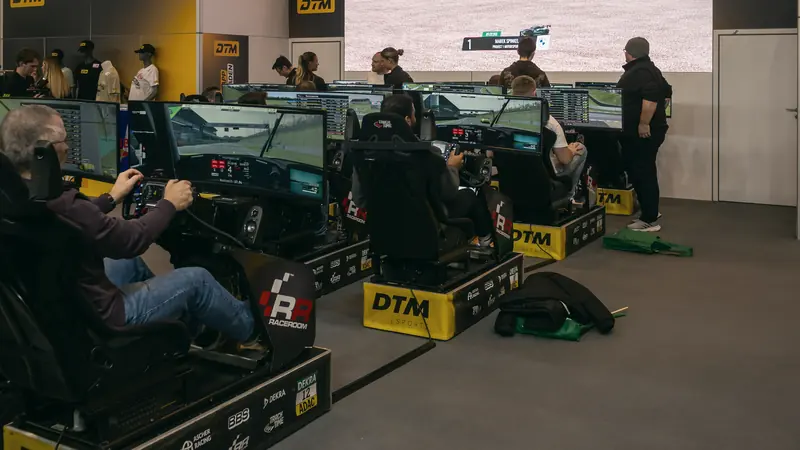
You are immersed in a tense 1v1 clutch round in Counter-Strike 2 or Valorant. Your crosshair rests squarely on an opponent's head at point-blank range. You click, observe the muzzle flash and blood decals splash across the wall, yet a millisecond later your operative collapses. The round summary display delivers a demoralizing verdict: "Damage Dealt: 0." You check your metrics dashboard: you subscribe to an expensive 1 Gbps fiber optic broadband tier, and your in-game telemetry shows a seemingly immaculate 15-millisecond ping. What caused your bullets to vanish into thin air?
You have fallen victim to the twin saboteurs of competitive esports networking: "Packet Jitter" and "Bufferbloat."
In competitive esports, raw gigabit bandwidth is completely irrelevant if your network packets fail to arrive at the game server with mechanical, clockwork precision. A momentary 40-millisecond latency spike occurring during a trigger pull causes the game server's authoritative tickrate reconciliation engine to discard your shots entirely, penalizing your precision while rewarding opponent interpolation.
Technical Mechanics: How Jitter and Bufferbloat Subvert In-Game Physics
To understand why a low numeric ping indicator can mask crippling lag, one must examine how real-time UDP gaming packets navigate home hardware and telecommunications transit pipelines.
+-------------------------------------------------------------+
|             BUFFERBLOAT & JITTER DESYNCHRONIZATION          |
|                                                             |
| [ Lightweight In-Game UDP Packets ]                         |
|                 \                                          |
|                  v                                          |
| [ Consumer Gateway Oversized FIFO Buffer ] <--- [ 4K Stream]|
| (Buffer Holds Thousands of Bulky TCP Frames)                |
|                 |                                           |
|                 v                                           |
| [ Queuing Latency Spikes from 15ms to 240ms ]               |
|                 |                                           |
|                 v                                           |
| [ Server Tickrate Reconciliation Discards Late Packets ]    |
|                 |                                           |
|                 v                                           |
| [ GHOST SHOTS / REVERSE POSITION RUBBERBANDING ]            |
+-------------------------------------------------------------+
1. Consumer Router Bufferbloat (Oversized FIFO Queues)
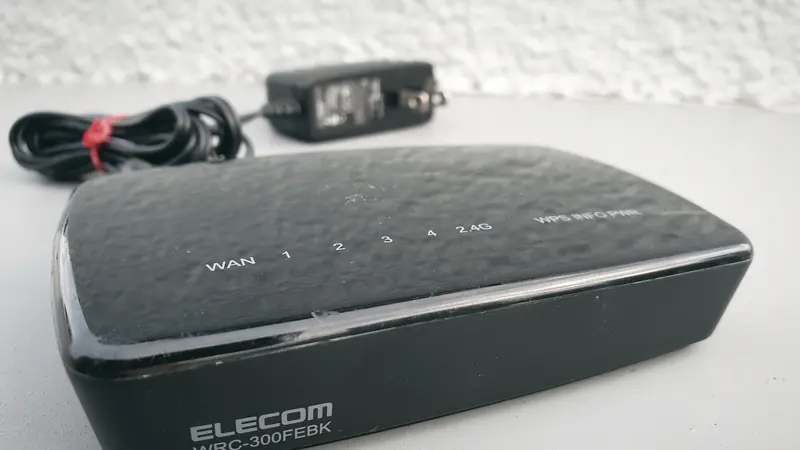
Most standard ISP-provided residential routers feature oversized First-In, First-Out (FIFO) packet buffers designed to maximize synthetic throughput during file downloads. When another device on your local network streams high-bitrate 4K video, initiates a cloud sync, or downloads a patch, these oversized buffers fill with heavy TCP frames. Your lightweight, time-sensitive game packets must wait in line behind massive video segments, causing queuing delay to explode from 15ms to over 250ms dynamically.
2. Packet Jitter and Server Tickrate Desynchronization
Jitter represents the variance in arrival intervals across successive network packets. In high-tickrate competitive environments (operating at 64 or 128 updates per second), servers calculate physical hitboxes based on continuous temporal interpolation. When packet jitter fluctuates wildly, the authoritative game server cannot accurately compute your vector, leading to rubberbanding, delayed hit registration, and getting eliminated behind solid architectural cover (the infamous "peeker's advantage").
3. Sub-Optimal ISP BGP Peering and Congestion Hops
Internet Service Providers frequently route packet streams across convoluted, cost-optimized Border Gateway Protocol (BGP) transit links rather than low-latency direct interconnects. Your gaming packets may travel through three extra regional routing exchanges before reaching the target game server cluster, compounding latency variance during peak evening hours.
Tactical Playbook: Achieving Tournament-Grade Network Purity
Eliminating bufferbloat and stabilizing packet delivery requires enforcing strict traffic shaping and physical link hygiene:
- Deploy Smart Queue Management (SQM): On compatible routers or custom open-source firmware (such as OpenWrt), enable modern Active Queue Management algorithms like CAKE or FQ-CoDel. SQM isolates lightweight gaming packets into dedicated prioritization queues, completely eliminating bufferbloat induced by concurrent household downloads.
- Mandate Hardwired Ethernet Over Wi-Fi: Wireless channels are innately subject to radio frequency interference, wall attenuation, and airtime congestion. A physical Cat6 or Cat7 Ethernet cable guarantees zero radio-frequency packet loss and sub-millisecond local gateway latency.
- Continuously Benchmark Latency Purity: Periodically evaluate your bufferbloat grades and packet pacing utilizing our high-precision what is my ip utility.
- Audit Your Upstream Routing Footprint: Verify your external network endpoint using what is my ip and trace upstream autonomous system numbers via ip lookup.
Tournament-Grade Network Performance with VPNRice
When retail ISP transit links suffer from suboptimal BGP routing and evening congestion, VPNRice delivers an optimized, high-throughput network highway engineered specifically for competitive gamers.
Built upon the streamlined RiceGuard protocol, VPNRice routes your real-time gaming packets through premium, low-hop backbone infrastructure. By circumventing convoluted consumer ISP exchange points, RiceGuard minimizes transit hops, stabilizing packet jitter to a razor-sharp consistency under 2 milliseconds.
Furthermore, the lightweight ChaCha20-Poly1305 cipher operates with minimal packet encapsulation overhead, preventing processor bottlenecks while maintaining packet integrity. Run our webrtc leak test to confirm connection stability, and dominate every clutch round with confidence.
Take control of your competitive gaming latency and elevate your rank today: