 Tiếng Việt
 English
 中文
 Español
 हिन्दी
 Français
 Português
 Русский
 Deutsch
 日本語
 한국어
 Italiano
 Bahasa Indonesia
 ไทย
 বাংলা
 ລາວ
 မြန်မာ
 العربية
 فارسی
 اردو
 Українська
 Română
 Azərbaycan
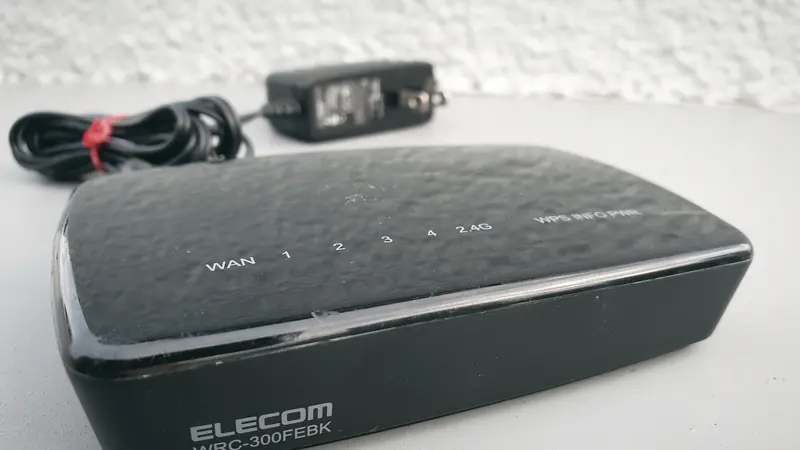
Wireless local area networks (WLANs) are the foundation of modern residential and workplace connectivity. From high-speed fiber routers to public café hotspots, billions of consumer and enterprise devices rely on IEEE 802.11 Wi-Fi protocols to access the internet. However, legacy Wi-Fi architectures suffer from a critical architectural flaw at the link layer: the transmission of unencrypted, unauthenticated management frames.
This structural vulnerability enables a common, highly disruptive attack known as a Wi-Fi deauthentication attack. Using low-cost, portable hardware such as an inexpensive Wi-Fi adapter or an embedded microchip, a nearby actor can forge disconnect frames that sever target devices from legitimate access points instantly. Understanding the mechanics of management frame spoofing and implementing modern protocol mitigations is essential for safeguarding wireless workflows.
The Mechanics of IEEE 802.11 Deauthentication Attacks
1. Plaintext Link-Layer Management Frames in WPA2
Under the widely deployed WPA2-Personal and WPA2-Enterprise standards, cryptographic protections apply exclusively to data payload frames. Control and management frames—including beacon, probe request, authentication, association, and deauthentication packets—are broadcast in plaintext across the radio frequency spectrum.
Because deauthentication frames contain no cryptographic signature or message authentication code (MAC), an access point or client accepts disconnect instructions at face value based solely on the sender's Media Access Control (MAC) address. An attacker operating in monitor mode simply sniffs the target's MAC address and broadcasts forged deauth packets spoofing the access point's identity. The target client immediately terminates its Wi-Fi session.
2. Strategic Objectives Behind Wireless Disconnection
While some deauthentication attacks constitute simple denial-of-service disruptions, sophisticated adversaries execute frame spoofing as an initial stepping stone to more severe intrusions:
- Handshake Harvesting: When a victim device is kicked off the network, it immediately attempts to reconnect, executing the four-way WPA2 handshake. Attackers capture this exchange to crack the pre-shared key (PSK) offline using automated hashcat dictionaries.
- Evil Twin Redirection: By continuously blasting deauthentication frames at a legitimate access point, attackers force nearby devices to roam. The victim's phone or laptop then associates with a nearby malicious hotspot transmitting the identical SSID name at a stronger signal level.
How WPA3 Protected Management Frames (PMF) Solve Link-Layer Spoofing
The IEEE 802.11w amendment, integrated as a mandatory baseline requirement in WPA3, introduced Protected Management Frames (PMF).
With PMF enabled, unicast management frames—such as deauthentication and disassociation packets—are cryptographically encapsulated using the active pairwise temporal key (PTK). Broadcast management frames are validated using a Broadcast Integrity Protocol (BIP) key. If an external attacker broadcasts forged deauthentication packets, the receiving device inspects the cryptographic integrity tag, identifies the invalid signature, and discards the spoofed frame without disconnecting.
| Wireless Feature | Legacy WPA2 Standard | Modern WPA3 Standard |
|---|---|---|
| Management Frame Protection | Optional (often disabled / absent) | Mandatory (802.11w PMF enforced) |
| Handshake Architecture | Four-Way PSK Handshake (vulnerable to dictionary attacks) | Simultaneous Authentication of Equals (SAE dragonfly) |
| Encryption Cipher | 128-bit AES-CCMP | 128-bit / 192-bit AES-GCM & CNSA |
| Reconnection Attack Resistance | Low (handshake capture feasible) | High (forward secrecy prevents offline decryption) |
3. Transition Mode Vulnerabilities in Mixed Environments
Many commercial routers and home access points operate in WPA2/WPA3 Transition Mode to maintain backwards compatibility with legacy IoT hardware. In transition mode, Protected Management Frames are configured as optional rather than mandatory, allowing devices without 802.11w support to connect alongside modern endpoints.
Security researchers have demonstrated that attackers can exploit transition mode through downgrade attacks. By broadcasting forged association responses or jamming WPA3 capability elements, an adversary can coerce dual-mode clients into falling back to unprotected WPA2 associations, reinstating susceptibility to deauthentication frame injection. True link-layer protection requires configuring access points to operate exclusively in WPA3-Only mode.
Bridging the Link-Layer and Network-Layer Gap with VPNRice
While upgrading routers and endpoints to WPA3 effectively shields against local 802.11 deauthentication attacks, millions of legacy access points in hotels, airports, and coffee shops will continue running vulnerable WPA2 networks for years. Furthermore, PMF only protects the physical link between the device and the router—it provides zero defense against malicious gateway operators or upstream data interception.
VPNRice provides comprehensive layer-3 and layer-4 cryptographic shielding that complements wireless defenses. By directing all device transmissions through VPNRice's RiceGuard protocol, session continuity is maintained even across unstable radio links.
If momentary radio interference or link renegotiation occurs, VPNRice's kernel-level Kill Switch ensures that no unencrypted packets slip into the open airwaves. Every web request, corporate document, and credential exchange remains securely encapsulated in ChaCha20-Poly1305 ciphertext, rendering rogue access points and evil twin redirection attempts completely ineffective.
Shield your wireless connections across all public and private networks today: