 Tiếng Việt
 English
 中文
 Español
 हिन्दी
 Français
 Português
 Русский
 Deutsch
 日本語
 한국어
 Italiano
 Bahasa Indonesia
 ไทย
 বাংলা
 ລາວ
 မြန်မာ
 العربية
 فارسی
 اردو
 Українська
 Română
 Azərbaycan
During a quiet evening dinner at home, you casually mention to a family member that you are considering renovating the kitchen countertops or purchasing an air dehumidifier. You never picked up your smartphone, nor did you type a single character into any search engine. Yet barely two hours later, as you scroll through your social media feeds, your display is inundated with targeted promotional banners advertising industrial countertop resurfacing and compact room dehumidifiers.
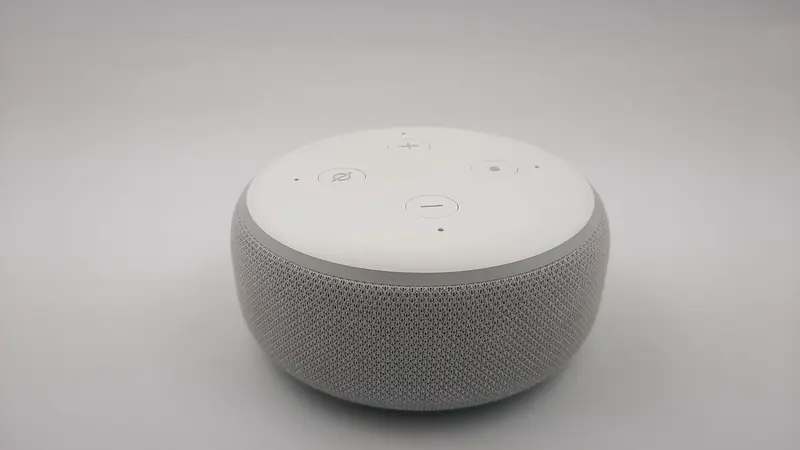
An eerie sensation of invisible surveillance creeps in. Your gaze turns toward the sleek smart speaker resting unobtrusively on your living room console table, its LED status ring occasionally pulsing with faint ambient luminescence. Could that compact smart home appliance be covertly recording every intimate syllable spoken within the privacy of your home?
Acoustic security research confirms this phenomenon is far from paranoid folklore. Modern voice assistants frequently suffer from accidental wake-word triggers, uploading unencrypted audio telemetry to cloud inference servers without explicit user interaction.
Technical Anatomy: How Far-Field Microphones Capture and Exfiltrate Speech
To provide near-instantaneous responses to conversational prompts like "Hey Google" or "Alexa," voice-enabled smart speakers operate far-field microphone arrays that remain active around the clock.
+-------------------------------------------------------------+
|              VOICE ASSISTANT ACOUSTIC HARVESTING            |
|                                                             |
| [ Ambient Living Room Dialogue ] -> [ MEMS Far-Field Mics ] |
|                                             |               |
|                                             v               |
| [ Phonetic Acoustic Resemblance ] -> [ False Trigger Event ]|
|                                             |               |
|                                             v               |
| [ 10-15s Audio Buffer Captured ] --> [ Ingestion to Cloud ] |
|                                             |               |
|                                             v               |
| [ Human Annotator Transcription ] -> [ Behavioral Profiling]|
+-------------------------------------------------------------+
1. The Anatomy of False-Positive Wake-Word Triggers
Embedded hardware microcontrollers utilize lightweight local neural network models to recognize phonetic wake words. Due to aggressive optimization for low power consumption, these edge models maintain high tolerance thresholds. Everyday conversational phrases, television dialogue, or podcast audio frequently match wake-word phonemes. Empirical testing reveals that popular smart speakers trigger unintentionally between 1.5 and 2.5 times every twenty-four hours, capturing between ten and thirty seconds of raw ambient room audio and streaming it directly to vendor cloud datacenters.
2. Third-Party Human Review Pipelines
Vendor machine learning models require regular algorithmic fine-tuning to improve recognition accuracy. Tech conglomerates deploy third-party contractor facilities to manually transcribe uploaded audio snippets. Countless intimate conversations, medical disclosures, corporate trade secrets, and financial details have been audited by remote human contractors without informed consumer knowledge.
3. Behavioral Advertising Telemetry Aggregation
Transcribed acoustic payloads undergo natural language processing (NLP) to extract semantic intent, consumer sentiment, and commercial keywords. These telemetry tags are ingested by cross-platform behavioral advertising networks, correlating spoken home dialogue with mobile advertising profiles across your local wireless network.
Strategic Defense: Fortifying Domestic Acoustic Sanctuary
Restoring privacy within a connected smart home demands disciplined physical controls and tactical network segmentation:
- Engage Hardware Physical Microphone Switches: Most reputable smart speakers feature a physical hardware toggle switch. Unlike soft-touch capacitive buttons, this switch physically breaks the electrical VCC circuit supplying power to the analog MEMS microphone board. When conducting confidential discussions or placing devices in sleeping quarters, always engage the hardware disconnect.
- Purge Voice History and Opt Out of Human Auditing: Navigate to vendor account management portals. Set automated retention schedules to delete audio recordings after thirty days, and revoke permission for human contractors to review your voice samples for model training.
- Isolate IoT Hardware on Dedicated VLANs: Never attach smart speakers to the primary wireless local area network utilized by your personal smartphones and confidential work laptops. Enforce network segmentation by creating an isolated Guest Network or dedicated IoT Virtual Local Area Network (VLAN).
- Audit Your Exposed Network Perimeter: Periodically evaluate your network exposure by inspecting external routing data using what is my ip and verifying IP parameters via ip lookup.
Domestic Digital Sovereignty with VPNRice
While hardware switches secure your physical microphones, VPNRice delivers an essential defensive perimeter for your personal computing devices across the home network.
Powered by the high-performance RiceGuard protocol, VPNRice encapsulates all your laptop and mobile data streams inside an impenetrable ChaCha20-Poly1305 encrypted tunnel. Even if smart home appliances or rogue IoT controllers on your local subnet attempt to conduct unauthorized network reconnaissance (LAN ARP scanning), your primary devices remain completely shielded and cryptographically isolated.
Supported by automated DNS leak protection and a strict zero-logs operational standard, VPNRice prevents cross-device advertising trackers from associating your household data streams with third-party advertising brokers. Validate your network posture using our webrtc leak test, and maintain absolute sovereignty over your home.
Shield your private home environment and regain complete digital peace of mind: