Tiếng Việt
 English
 中文
 Español
 हिन्दी
 Français
 Português
 Русский
 Deutsch
 日本語
 한국어
 Italiano
 Bahasa Indonesia
 ไทย
 বাংলা
 ລາວ
 မြန်မာ
 العربية
 فارسی
 اردو
 Українська
 Română
 Azərbaycan
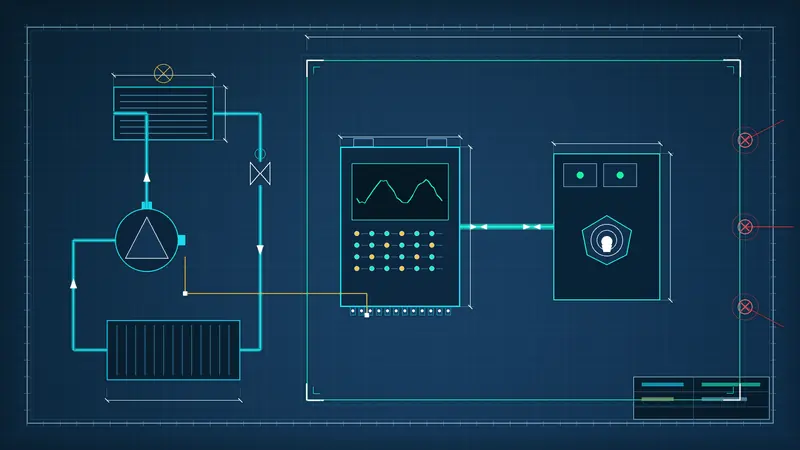
Industrial food retail, cold storage logistics, and pharmaceutical temperature management rely extensively on specialized automated controllers. At the core of commercial grocery store refrigeration and cold distribution centers sits the Danfoss AK-SM 800A series System Manager family. These rack-mounted embedded systems oversee complex closed-loop cooling, modulation of massive compressor racks, condenser fan cycles, and electronic expansion valves across commercial food facilities.
In late November 2026, the Cybersecurity and Infrastructure Security Agency (CISA) cataloged multiple severe vulnerabilities affecting the Danfoss AK-SM 800A series. Network telemetry demonstrates that unauthorized actors are scanning public IPv4 spaces to exploit remote code execution flaws, manipulate temperature setpoints, and disable safety alerts. Securing critical operational technology (OT) infrastructure requires re-evaluating legacy exposure models and deploying robust defense-in-depth isolation mechanisms.
      CONVENTIONAL DIRECT-EXPOSED OT REFRIGERATION DEPLOYMENT
 [Untrusted WAN] ──TCP 80/443/4999──> [Danfoss AK-SM 800A] ──RS-485/Modbus──> [Ammonia Compressors]
                                      (CVE-2023-25915 RCE)                      (Catastrophic Hazards)

      WIREGUARD CRYPTOGRAPHIC BASTION MODEL (CLOAKED & ISOLATED)
 [Remote Admin] ──UDP 51820 (Crypto)──> [Stealth Bastion Gateway] ──Internal VLAN──> [Danfoss AK-SM]
                                        (Drops Unauthenticated Packets)              (Zero Public Ports)
Danfoss AK-SM Architecture and Threat Landscape
The Danfoss AK-SM 800A line comprises the AK-SM 820A, AK-SM 850A, and AK-SM 880A System Managers. These appliances run specialized embedded Linux environments designed to coordinate communications across fieldbus networks like Modbus RTU, BACnet MS/TP, and LonWorks. While fieldbuses handle physical I/O telemetry from temperature probes and compressor pressure sensors, the controller presents an HTTP/HTTPS web management console alongside proprietary supervisory interfaces on TCP port 4999.
Historically, facilities management teams configured these systems for external remote access by exposing ports directly through cellular modems or corporate branch routers. Field technicians frequently rely on remote diagnostics to monitor perishable product displays during non-business hours. However, exposing industrial management web consoles directly to the public Internet creates an open target surface for opportunistic scanning engines, automated vulnerability crawlers, and advanced state-sponsored adversaries.
When an industrial refrigeration controller is breached, the attacker gains direct command over physical thermodynamic systems. In food retail environments, altering evaporator temperature thresholds can spoil hundreds of metric tons of perishable produce, seafood, and dairy. In specialized chemical plants and large-scale distribution depots utilizing anhydrous ammonia refrigeration, maliciously overriding emergency compressor shutoff valves creates immediate risks of toxic chemical venting and life-threatening workplace hazards.
Multi-CVE Technical Exploit Analysis
The vulnerability cluster affecting Danfoss AK-SM 800A appliances encompasses flaws that can be combined sequentially into an unauthenticated remote execution vector:
Directory Traversal (
CVE-2023-25914): The embedded web interface handles incoming XML requests via an unauthenticated endpoint (/comm.xml). Improper input normalization allows attackers to issue path traversal sequences, accessing arbitrary files within the local embedded filesystem. Attackers extract local configuration files containing hashed administrative credentials and system network configurations.Command Injection and Root Execution (
CVE-2023-25915): An authenticated API routine fails to sanitize parameters before executing system management shell commands. By supplying shell metacharacters within administrative parameter fields, an attacker executes arbitrary system commands with root privileges. When combined with credential exposure or authentication circumvention, remote attackers achieve total control over the host operating system.Dynamic Passcode Evasion (
CVE-2025-41450): The system features a vendor recovery mechanism known as code-of-the-day authentication. Vulnerability researchers discovered that the algorithm generating this temporary administrative token depends strictly on predictable system timestamps and device serial parameters. Malicious actors calculate valid administrative access tokens remotely without user interaction.
# Example verification query inspecting public controller footprint
curl -s -k -I --connect-timeout 5 "https://198.51.100.24:443/comm.xml" | grep -i "Server:"
By chaining the code-of-the-day generation weakness or configuration disclosure with root command injection, attackers obtain an interactive shell on the embedded Linux environment. From this pivot point, malicious actors manipulate low-level Modbus registers, overwrite controller firmware, or establish persistent backdoors into adjacent enterprise operational networks.
Physical Risks in Industrial Cold Chains
Unlike standard IT servers where unauthorized access typically results in data exfiltration or database encryption, industrial control system compromises manifest directly in the physical physical world:
Food Safety Spoilage: Supermarkets maintain strict temperature windows between 1°C and 4°C for fresh dairy, and below -18°C for frozen inventory. Attackers subtly elevating setpoints by 6°C cause bacterial growth while intentionally suppressing dashboard warning lights, leading to massive inventory losses and public health recalls.
High-Pressure Ammonia Disruption: Industrial facilities using closed-loop ammonia cooling operate under high pressure. Disabling automated relief protocols and locking evaporator fans while running multi-stage reciprocating compressors pushes piping past maximum burst pressures, creating extreme structural hazards.
Transcontinental Cold Supply Chains: Modern pharmaceutical distribution centers store vaccines and biological therapeutics within narrow temperature limits. Disabling automated defrost scheduling creates massive ice buildup on cooling coils, leading to total cooling failure across multi-million dollar pharmaceutical stocks.
WireGuard Cryptographic Bastion Architecture
Protecting critical industrial refrigeration infrastructure demands removing management interfaces from the public Internet entirely. Traditional corporate SSL-VPN solutions often prove impractical for distributed refrigeration substations due to high latency, brittle client software, and vulnerabilities in legacy web portals. In contrast, modern WireGuard cryptographic bastions offer lightweight, highly resilient isolation for industrial field controllers.
Operating directly within the Linux kernel space, WireGuard provides stealth network cloaking. A WireGuard endpoint maintains zero exposed listening ports to unauthenticated scanners. Incoming packets lacking a valid ChaCha20-Poly1305 cryptographic handshake are dropped silently without sending ICMP unreachable or TCP reset responses. To port scanners like Shodan or Censys, the controller host appears completely non-existent.
# /etc/wireguard/wg0.conf (Bastion Gateway Interface)
[Interface]
Address = 10.100.0.1/24
ListenPort = 51820
PrivateKey = BASTION_PRIVATE_KEY_PLACEHOLDER

# Enforce strict kernel packet forwarding and isolation
PostUp = iptables -A FORWARD -i wg0 -o eth0 -d 192.168.50.10 -p tcp --dport 443 -j ACCEPT
PostDown = iptables -D FORWARD -i wg0 -o eth0 -d 192.168.50.10 -p tcp --dport 443 -j ACCEPT

# Authorized Refrigeration Maintenance Engineer
[Peer]
PublicKey = TECHNICIAN_PUBLIC_KEY_PLACEHOLDER
AllowedIPs = 10.100.0.2/32
In this architecture, the Danfoss AK-SM controller resides on an isolated OT VLAN (e.g., 192.168.50.0/24) with all inbound Internet routing blocked at the perimeter edge. The WireGuard bastion gateway acts as the sole access portal. Cryptographic key pairs uniquely authenticate authorized field engineers. Communication travels across an encrypted channel, preventing man-in-the-middle manipulation and unauthorized administrative commands.
Organizations operating Danfoss System Managers should immediately update firmware to the latest vendor release, change all default technician credentials, disable unused legacy telnet services, and cloak management portals behind encrypted cryptographic tunnels.