





Exclusive Offer
Get your Free 30 days access
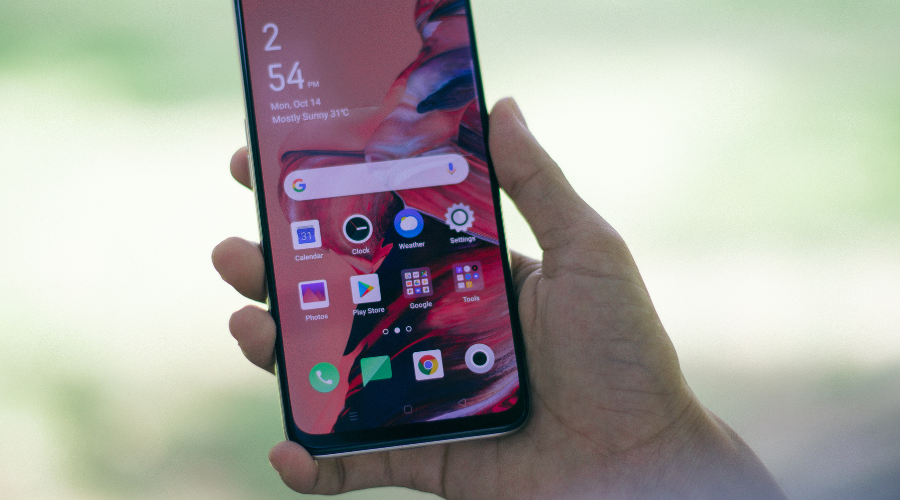
Currently, users downloading applications to personal devices has unintentionally increased the risk of information insecurity. Users need to quickly equip themselves with measures to prevent data theft on smartphone applications so they can use them with peace of mind.
When it comes to data privacy, typically with smartphone applications, it is difficult to guarantee 100% security. But in reality, there is no specific way to know whether these applications are tracking users or not. Even if the user does not directly install the application, there is actually no way to prevent it. Which protection method is perfect in today's ever-evolving technological world? An app that works well today could become a bad actor in the future if the company that owns the app is sold, transferred, diverted, or compromised. Below are some recommendations that data security experts suggest for users to protect personal data when using the application.
Use a password manager
The strongest passwords are those that use random character strings consisting of letters, numbers, and special symbols in no particular order, are less likely to be found in a dictionary, and are difficult to be cracked by a computer. lock up. However, the downside is that these passwords are often complex and difficult to remember. Therefore, a password manager is needed to keep all user passwords in one application strictly encrypted and protected. This manager also allows users to securely create and remember passwords. While apps like Google Chrome and Samsung's phone apps offer password saving features, security experts recommend using a password manager to manage your passwords. safely and effectively. Users should avoid using the same password for multiple accounts because if one account is compromised due to password leaks, it is likely that all other accounts will be compromised. With a password manager, each user's account can have a different, complex, and difficult-to-crack password. Some managers will even support password generation for users. The Bitwarden app is one of many apps that has multiple password managers for users to choose from and refer to.
Use VPN with public Wifi
If users intend to access public Wifi networks while using their phones instead of using 4G or 5G mobile data, security experts recommend using a VPN. A virtual private network can keep a user's data out of reach of others on the same public network. They can also conceal users' data transmissions, avoid filtering and censorship on the internet, and allow access to a variety of content. The purpose of using a VPN is to protect users when accessing a free public network without others taking advantage of them to infiltrate and steal information on mobile devices. When looking for a VPN provider, it's important to do your research and find out if the company is well-known and trustworthy. The Apple App Store and Google Play Store have many free VPN applications, but some of them are not really good and effective, so users should be careful and research carefully before choosing a VPN application. to use. Regardless of how often a user uses a VPN, it's important to read the service agreement carefully to know what data may be collected and where that data is stored by the service provider.
Pay attention to app permissions
One thing to note that almost all experts mention is to carefully check the permissions that the application requests. Users should also ask themselves whether it's reasonable for an app to request certain permissions. When an app requests access to data unrelated to its functionality is a sign that users need to pay attention to. “If you're downloading a simple app for your pocket calculator and app,” says Stephen Hart, CEO of Cardswitcher (the UK price comparison site for card processing and merchant services) is requesting access to your contact list and location. So why does an app need to see your contact list and location? Such requests seem unnecessary and we will have to be careful with these requests.” In addition to paying attention to the permissions users grant to an app, it's important to monitor how the user's phone behaves after the app is downloaded. Shlomie Liberow, a technical program manager and security expert at HackerOne, said that visible changes in battery life are a notable signal, as malicious apps infiltrate users' devices. will continuously run in the background on that device and will cause the battery to drain faster than usual.
Learn about the application and the company that manages the application
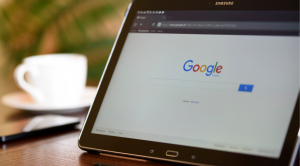
Although users do not know whether the applications they download are dangerous or not, we can do a quick search on Google to find out more information about applications intended to be downloaded to our phones. me. Experts suggest searching for the name of the app followed by the terms “data leak” or “scam.” Experts say the results will tell users whether the app company has had any recent data or privacy problems. This search will also tell users whether data breaches are a common occurrence at that company, and if they have experienced problems, how they have handled them. If the company has been affected multiple times and has done nothing to resolve the issue, stay away from that app because it shows that they don't care and manage security issues closely.
Limit posting information on social networks
Facebook's Cambridge Analytica data leak in March 2018 plunged the social network into a data scandal. But even users who were not involved in this incident (or never used the app) may still be at risk of privacy violations. If the user appears on a friend or family member's account, that user is still affected. After those accounts are exposed, companies can build a "mining profile" to store detailed information such as personal preferences, political leanings, religion, etc. of a person. users and much more. Users should limit the amount of information shared on social networks, including when asked for their profile information when creating an account. The more information shared, the more data will be available to create ads. Only the minimum and necessary amount of information should be provided. The more information provided, the greater the risk in the event of a data breach. Smartphone applications often use user information to target advertising. Some people are even concerned that these applications also access the phone's microphone to better target ads.
Always update software
Taking the time to update your smartphone's operating system is important to keep your data safe. Updates allow users to stay ahead of hackers and the latest exploits they are using on the internet. Settings should be adjusted so that the phone can automatically update to the latest versions. The methods that cybercriminals are using to infiltrate users' phones to steal data are constantly evolving, so how to protect smartphones also needs to keep up with attack trends. of cybercrime.
Only download applications with a specific origin and a commitment to information security
Not all apps in the App Store or Google Play Store are completely trustworthy, but experts still recommend that users only download from official stores. Applications available on these platforms will be checked to ensure that they meet data protection quality standards and will also be required to offer user-specific privacy policies. Downloading apps from unofficial or unsafe websites increases the risk of malware, ransomware, and trojans infecting users' devices. In the worst case, hackers can take complete control of the user's device. Avoiding apps that are produced by only one developer, users should research how long the app has been available and look at reviews before downloading. App reviews should include different rankings and number of votes because some fraudulent apps will also display fraudulent reviews. Users should also question unusual issues such as apps that rank highly without a detailed description or explanation of the app. Check to see if the app is mentioned on the third-party site. Finally, user reviews will be the best and most reliable source of information.